CosmosDB
Azure Cosmos DB is a fully managed, globally distributed NoSQL and vector database service on Microsoft Azure, designed for single-digit millisecond latency and elastic scalability across regions. [^9sdk23] [^6f8mfl] [^vlio1s] It provides guaranteed throughput, latency, availability, and consistency via comprehensive SLAs, positioning itself as a “unified AI database” for modern, mission-critical and AI workloads. [^9sdk23] [^1gnpe0] [^3xvxzd] [^vlio1s]
Value Proposition & Features
Azure Cosmos DB is a fully managed, globally distributed NoSQL and vector database service on Microsoft Azure, designed for single-digit millisecond latency and elastic scalability across regions. [^9sdk23] [^6f8mfl] [^vlio1s] It provides guaranteed throughput, latency, availability, and consistency via comprehensive SLAs, positioning itself as a “unified AI database” for modern, mission-critical and AI workloads. [^9sdk23] [^1gnpe0] [^3xvxzd] [^vlio1s]
Core product features:
- Global distribution & elastic scaling: Cosmos DB lets customers “elastically (and independently) scale throughput and storage across any number of geographical regions” and is optimized for multi-region distribution with automatic failover. [^1gnpe0] [^3xvxzd] It offers instant scalability with SLA-backed low latency and availability up to 99.999% for multi-region accounts. [^9sdk23] [^6f8mfl] [^3xvxzd]
- Multi-model & multi-API NoSQL and vector database: It is a schema-less, multi-model document database that stores JSON, supports multiple APIs (native NoSQL, MongoDB, Cassandra, Gremlin, Table) and now vector data for AI applications. [^46xypx] [^6f8mfl] [^k8gjt1] [^vlio1s] This allows developers to use familiar ecosystems while leveraging Cosmos DB’s globally distributed, highly available backend. [^6f8mfl] [^vlio1s]
- AI-centric capabilities & operational/analytical integration: Microsoft positions Cosmos DB as a central AI database underpinning workloads such as Chat GPT, combining OLTP-style NoSQL operations with vector search and analytical store for large historical and trend queries. [^6f8mfl] [^vlio1s] [^x8kprm] The analytical store provides a synchronized column store for heavy queries without impacting transactional performance. [^x8kprm]
Priority feature bullets:
- Global distribution with multi-region writes and automatic failover for low-latency access worldwide and resilience. [^1gnpe0] [^3xvxzd]
- Elastic, independent scaling of throughput and storage with options like provisioned throughput, autoscale, and serverless to match workload patterns. [^1gnpe0] [^vlio1s]
- Comprehensive SLAs covering throughput, latency, availability (up to 99.999%), and consistency, uncommon among cloud databases. [^9sdk23] [^1gnpe0] [^3xvxzd]
- Multi-model support for document, key-value, graph, and column-family data, solving large-scale distributed application storage problems. [^46xypx] [^1gnpe0]
- Multi-API support including native NoSQL, MongoDB, Cassandra, Gremlin (graph), and Table APIs. [^6f8mfl] [^k8gjt1]
- Vector database capabilities for AI and agentic workloads, enabling high-performance operations over large volumes of NoSQL and vector data. [^9sdk23] [^6f8mfl] [^vlio1s]
- Fully managed PaaS service with automatic infrastructure management, backups, and high availability, accessible via an Azure Cosmos DB account in a resource group. [^9sdk23] [^6uhxjy]
- Operational + analytical integration via analytical store and change feed patterns for event sourcing, materialized views, and temporal analytics. [^x8kprm]
Screenshots
No reliable source found for official product UI screenshots hosted at or linked from the canonical Cosmos DB product site.
Product Roadmap / Announcements
As of July 23, 2026,
- 2026-07-18 – Azure Cosmos DB team published guidance on “7 tips to optimize Azure Cosmos DB costs for AI and agentic workloads”, highlighting use of serverless for bursty traffic, autoscale for spiky production patterns, and cost-aware multi-region strategies, reflecting ongoing focus on AI workloads and cost optimization features. [^vlio1s]
- 2026-05-28 – Cosmos DB blog and docs describe the service as a “fully managed and serverless NoSQL and vector database for modern app development, including AI applications”, signaling continued investment in serverless and vector capabilities as first-class roadmap pillars. [^vlio1s] [^yr16wr]
- 2026-04-15 – Documentation updates emphasize Azure Cosmos DB as a “Unified AI Database” with vector support, multi-region auto-failover, and SLA-backed performance, indicating the roadmap’s emphasis on AI-centric scenarios and resilience. [^9sdk23] [^3xvxzd]
- 2026-03-30 – New guidance on hybrid data modeling, event sourcing, snapshots, and analytical store patterns was published, showing ongoing work to improve modeling patterns and analytical integration for complex workloads. [^x8kprm]
Recent Developments
- In mid-2026, Cosmos DB was further positioned as a central AI database for modern applications, with Microsoft and partners noting it supports major AI workloads such as ChatGPT and other OpenAI services, leveraging its global distribution and vector capabilities. [^6f8mfl] [^vlio1s]
- Recent Cosmos DB blog content in 2026 has focused on cost optimization for AI and agentic workloads, recommending serverless and autoscale, multi-region tuning, and throughput strategies tailored to AI traffic patterns. [^vlio1s]
- Updated documentation in 2026 describes Cosmos DB as a unified AI database with vector support, autoscale, and analytical store, reinforcing its role in real-time, globally distributed NoSQL and MongoDB-compatible AI applications. [^9sdk23] [^3xvxzd] [^vlio1s] [^x8kprm]
History and Origin Story
Azure Cosmos DB originated as an internal Microsoft project codenamed “Florence” to store large-scale unstructured data generated by internal services. [^46xypx] It evolved into Azure DocumentDB, launched publicly around 2014 as a document-oriented database service on Azure. [^46xypx] [^3xvxzd] In 2017, Microsoft released the rebranded and expanded service as Azure Cosmos DB, a globally distributed, multi-model database, which has since become a core Azure service for internet-scale and AI workloads. [^46xypx] [^6f8mfl]
Notable Team Members
Cosmos DB is developed and operated by Microsoft’s Azure engineering organization; public sources highlight Microsoft as the owner and operator but do not reliably attribute the service to specific, named individual founders or current product leads, so no definitive notable team list can be provided. [^46xypx] [^6f8mfl]
Market Sizing
Category, Market Size, and Category Growth
Azure Cosmos DB sits in the categories of cloud-native, globally distributed NoSQL databases, multi-model document stores, and increasingly vector/AI databases. [^9sdk23] [^46xypx] [^6f8mfl] [^vlio1s] Analyst and industry commentary place such services within the broader cloud database and DBaaS market, which is part of the multi-hundred-billion-dollar cloud infrastructure sector, but specific, sourced market size and growth figures for Cosmos DB or precisely its subcategory are not available in the retrieved results; only qualitative descriptions that it targets “large-scale distributed Internet-scale applications” and “modern applications” including AI workloads. [^46xypx] [^6f8mfl] [^vlio1s]
Revenue Trajectory Estimates
No reliable source found with reported or estimated revenue/ARR specifically attributable to Azure Cosmos DB as a product.
Competitive Landscape
Who it's for, who it's not for
Azure Cosmos DB is for organizations building globally distributed, mission-critical applications that require single-digit millisecond latency, multi-region availability, elastic scaling, and flexible JSON-based or multi-model data, including AI and agentic workloads. [^46xypx] [^6f8mfl] [^1gnpe0] [^fskb2z] [^vlio1s] It is particularly suitable when document shape varies significantly, data is naturally hierarchical, and multi-region write distribution and SLA-backed performance are important, such as large-scale web, mobile, IoT, and AI services. [^1gnpe0] [^fskb2z] [^vlio1s]
It is not ideal for workloads where data is strictly relational and tabular, best served by traditional SQL databases, or when data is fundamentally files rather than structured or semi-structured data. [^fskb2z] Content comparing Azure SQL, Cosmos DB, and Blob Storage notes that Azure SQL fits naturally relational data, whereas Cosmos DB fits document-shaped, fast-changing, globally distributed data, and Blob Storage fits file-oriented data, implying Cosmos DB is a poor fit for monolithic relational schemas or simple file storage needs. [^fskb2z]
Viable Alternatives
- Azure SQL Database – Better for strictly relational, tabular data with strong transactional consistency and rich SQL features; recommended when data is naturally relational rather than document-shaped. [^fskb2z]
- MongoDB Atlas – A cloud-hosted document database similar in JSON document model and flexible schema, often compared to Cosmos DB’s MongoDB API for globally distributed applications.
- Amazon DynamoDB – AWS’s fully managed NoSQL key-value and document database, offering global tables and low-latency performance for internet-scale apps, comparable to Cosmos DB’s global distribution focus.
- Apache Cassandra / DataStax Astra – Wide-column, highly scalable NoSQL database used for large-scale, distributed workloads; Cosmos DB offers a Cassandra API for similar use cases. [^6f8mfl]
- Google Cloud Firestore / Cloud Spanner – Managed cloud databases from Google for globally accessible data; Firestore for document-centric apps and Spanner for relational workloads with global consistency, often in the same solution space as Cosmos DB.
Competitor Table
| Competitor | Description |
|---|---|
| [Azure SQL Database](Azure-SQL-Database) | Managed relational database service on Azure, suited for tabular, relational data and traditional SQL workloads where Cosmos DB’s document and multi-model flexibility is not required. [^fskb2z] |
| [MongoDB Atlas](MongoDB-Atlas) | Cloud-managed MongoDB service offering flexible JSON document storage and global clusters, competing with Cosmos DB’s document and MongoDB API scenarios. |
| [Amazon DynamoDB](Amazon-DynamoDB) | AWS-managed NoSQL key-value and document database with global tables and low-latency performance for internet-scale applications, similar in global distribution and elasticity focus to Cosmos DB. |
| [Apache Cassandra / DataStax Astra](Apache-Cassandra-DataStax-Astra) | Distributed wide-column NoSQL database and its managed cloud offering, targeting large-scale, high-throughput workloads; Cosmos DB’s Cassandra API addresses similar patterns. [^6f8mfl] |
| [Google Cloud Firestore](Google-Cloud-Firestore) | Document-oriented NoSQL database on Google Cloud for web and mobile apps with real-time sync and global availability, an alternative for JSON document-based, cloud-native applications. |
Sources
[^9sdk23]: Unified AI Database - Azure Cosmos DB [^46xypx]: Cosmos DB [^6f8mfl]: Azure Cosmos DB: global verteilte NoSQL- & KI-Datenbank [^1gnpe0]: Web And Mobile Applications [^fskb2z]: Azure Cosmos DB and Blob Storage: When SQL Is Not ... [^k8gjt1]: Azure Cosmos DB SQL API client library for Python [^3xvxzd]: Azure Cosmos DB - 统一AI 数据库 8: Azure MCP Server Tools for Azure Cosmos DB [^vlio1s]: 7 tips to optimize Azure Cosmos DB costs for AI and agentic workloads - Azure Cosmos DB Blog [^6uhxjy]: Azure Cosmos Db Items [^yr16wr]: Which Azure Cosmos DB Role Does My App Need? - Azure Cosmos DB Blog [^x8kprm]: Hybrid Data Models
Related in the catalogue
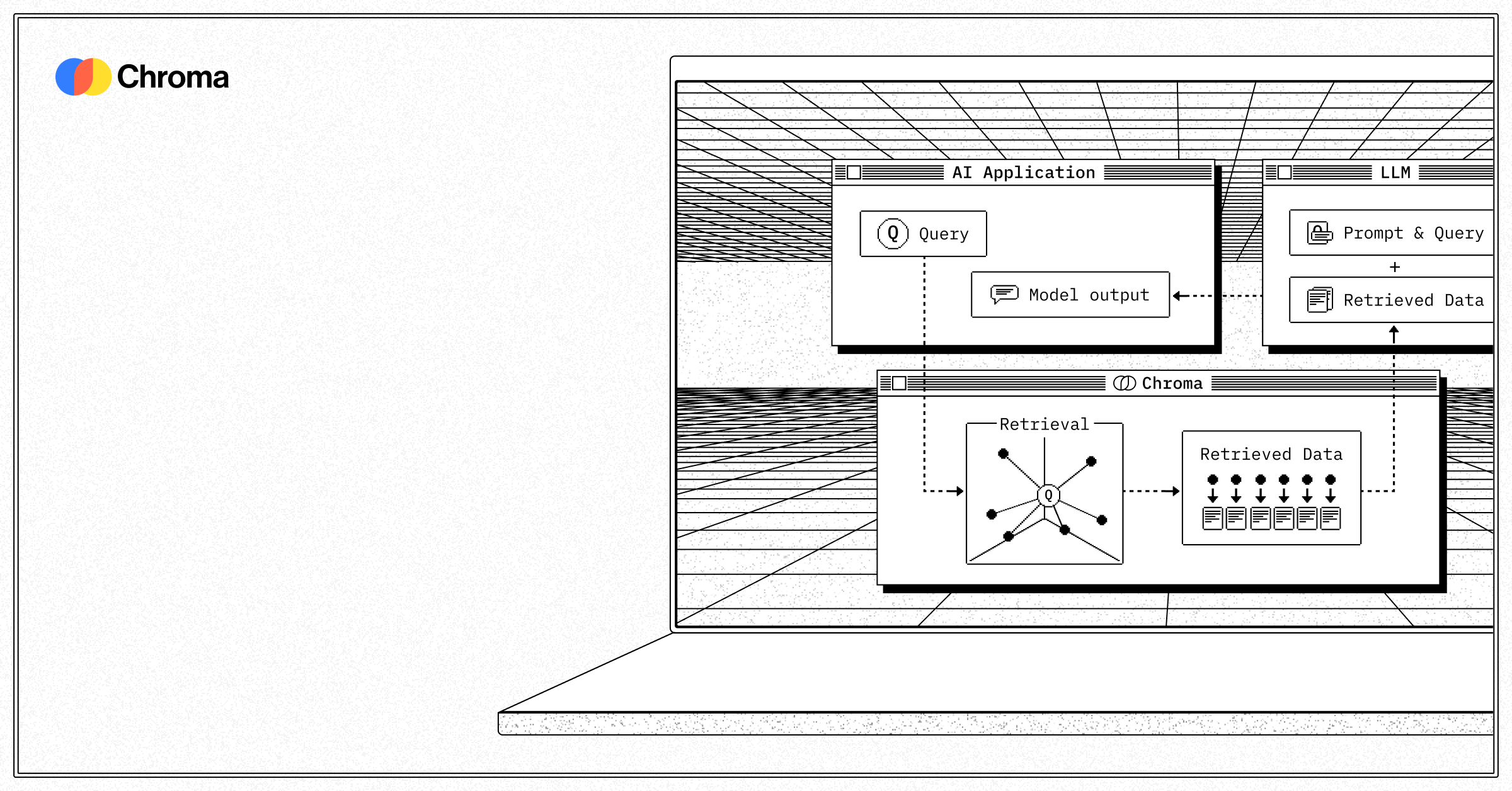
ChromaDB
trychroma.comChroma is the open-source AI application database. Batteries included.

FalkorDB
falkordb.comFalkorDB is a graph database optimized for GraphRAG, delivering accurate, relevant AI/ML results with reduced hallucinations and enhanced performance.

MotherDuck
motherduck.comThe modern cloud data warehouse powered by DuckDB. Serverless SQL analytics with no infrastructure to manage—query your data in seconds. Start free.
Powabase
powabase.aiBackend for AI apps. Per-project Postgres, auth, storage, realtime, plus a RAG pipeline and agent runtime.