ChromaDB
Chroma is the open-source AI application database. Batteries included.
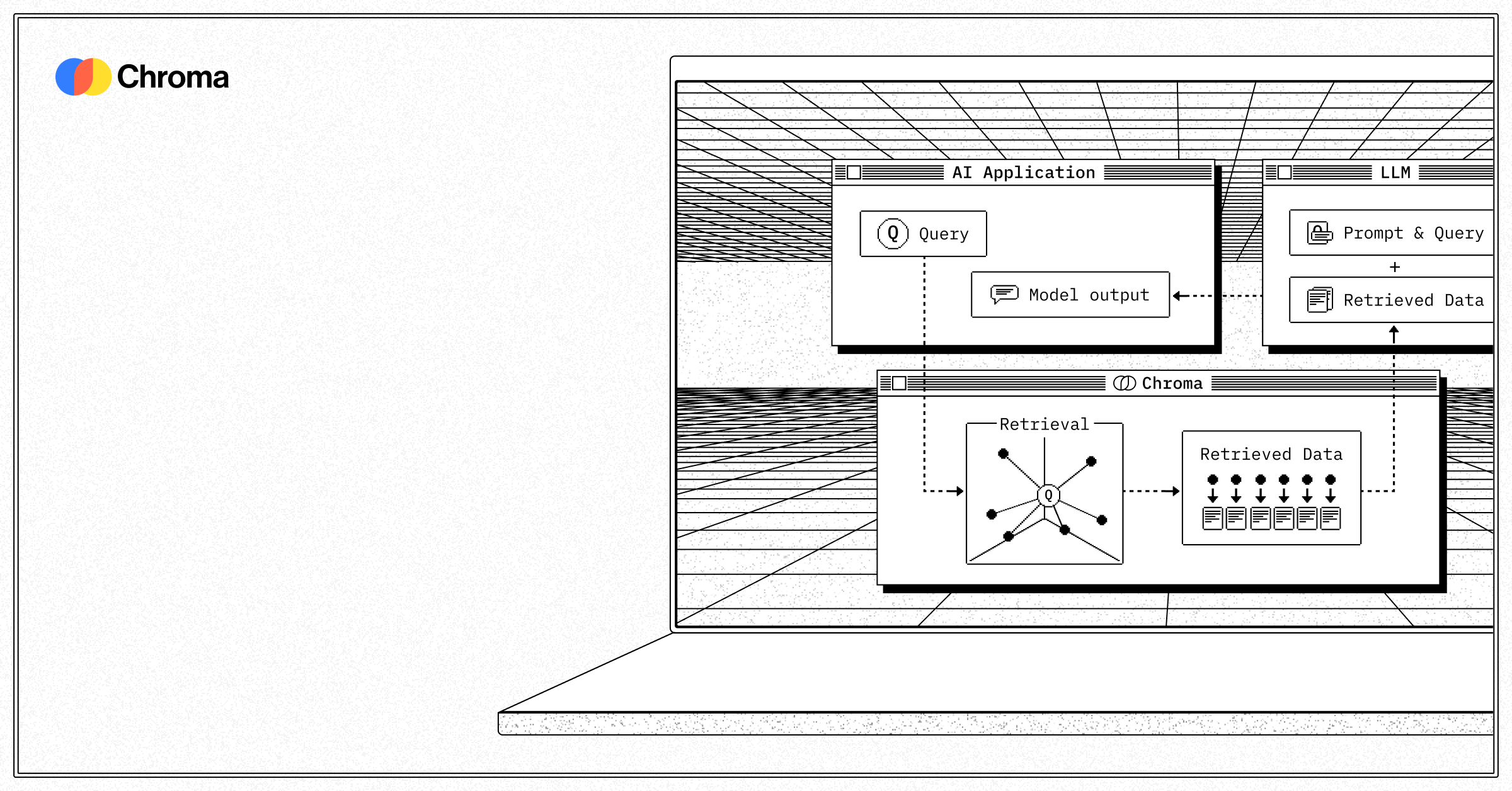
Table of Contents
- [2026-04-29 Call with Jeff Huberman](#2026-04-29-call-with-jeff-huberman)
- [Financing History](#financing-history)
- [Pre-Seed Round or Activity](#pre-seed-round-or-activity)
- [Seed](#seed)
- [Round Details for this Round](#round-details-for-this-round)
- [Lead and Committed Participants](#lead-and-committed-participants)
- [Terms-ish](#terms-ish)
- ["The Win" and Key Milestones Achieved (non-financial)](#the-win-and-key-milestones-achieved-non-financial)
- ["The Bet" & Key Expected Milestones (non-financial)](#the-bet-key-expected-milestones-non-financial)
- [Key Customers](#key-customers)
- [Current Business](#current-business)
- [Revenue trajectory vs Headcount](#revenue-trajectory-vs-headcount)
- [Plan to Ingest data Proactively](#plan-to-ingest-data-proactively)
- [Competitive Set](#competitive-set)
- [Competitive Positioning](#competitive-positioning)
- [Financing & Valuation Comparison (as of April 2026)](#financing-valuation-comparison-as-of-april-2026)
- [Comparative Analysis: Traction & Approach](#comparative-analysis-traction-approach)
- [1. Pinecone: The Managed "No-Ops" Leader 12](#1-pinecone-the-managed-no-ops-leader-12)
- [2. Weaviate: The Hybrid "Modular" Favorite [^znfkr0]](#2-weaviate-the-hybrid-modular-favorite-znfkr0)
- [3. ChromaDB: The Developer-First Prototyper](#3-chromadb-the-developer-first-prototyper)
- [Summary of Positioning](#summary-of-positioning)
- [The Strategic Importance of Chroma in the AI Developer Community](#the-strategic-importance-of-chroma-in-the-ai-developer-community)
- [What is Chroma?](#what-is-chroma)
- [Why Chroma Matters to AI Developers](#why-chroma-matters-to-ai-developers)
- [1. Developer-First Philosophy](#1-developer-first-philosophy)
- [2. Built for Modern AI Workflows](#2-built-for-modern-ai-workflows)
- [3. Recent Performance Revolution (2025)](#3-recent-performance-revolution-2025)
- [Key Differentiators from Competition](#key-differentiators-from-competition)
- [Versus Pinecone](#versus-pinecone)
- [Versus Weaviate](#versus-weaviate)
- [Versus Qdrant and Milvus](#versus-qdrant-and-milvus)
- [Unique Capabilities for Developers](#unique-capabilities-for-developers)
- [1. Seamless LLM Integration](#1-seamless-llm-integration)
- [Simple RAG pipeline with LangChain](#simple-rag-pipeline-with-langchain)
- [2. Flexible Storage Architecture](#2-flexible-storage-architecture)
- [3. Advanced Query Capabilities](#3-advanced-query-capabilities)
- [4. Production-Ready Features](#4-production-ready-features)
- [What Chroma Enables That Others Struggle With](#what-chroma-enables-that-others-struggle-with)
- [1. Rapid Prototyping to Production](#1-rapid-prototyping-to-production)
- [2. Cost-Effective Scaling](#2-cost-effective-scaling)
- [3. Framework Agnostic Development](#3-framework-agnostic-development)
- [4. Real-Time Experimentation](#4-real-time-experimentation)
- [Looking Forward](#looking-forward)
- [Conclusion](#conclusion)
- [Sources](#sources)
Summary
A popular Open Source Software Vector Database. One of the Vector Databases used for Retrieval-Augmented Generation and KAG approaches to AI.
Becoming a market leader in Knowledge Base AI as demonstrated through its tight relationship with Notion
2026-04-29 Call with Jeff Huberman
Financing History
[!RESPONSE] Financing History overview Initial Seed Round (Undisclosed): Reported as occurring around May 2022. Participants: Anthony Goldbloom (Kaggle founder) and Nat Friedman (former GitHub CEO). $18 million in funding across at least two reported rounds. Its primary major public financing was its April 2023 Seed round, which valued the company at $75 million** post-money. "
Sources: [^cplcj1] [^d39ugg] [^59ym3s]
Pre-Seed Round or Activity
| Amount | |
|---|---|
| Total | |
| Investor A | |
| Investor B | |
| Investor C | |
| Investor D | |
| Miscellaneous |
Seed
- Lead Investor: Quiet Capital (specifically led by Astasia Myers).
- Institutional Participants: Bloomberg Beta, Air Street Capital, and AIX Ventures.
- Notable Individual Participants:
- Naval Ravikant (AngelList co-founder).
- Max Altman and Jack Altman (brothers of Sam Altman).
- Guillermo Rauch (CEO of Vercel).
- Amjad Masad (CEO of Replit).
- Akshay Kothari (Notion) and Spencer Kimball (CockroachDB).
- Jordan Tigani (CEO of MotherDuck).
| $75M EV / Participants | Amount | EV |
|---|---|---|
| Total | $18M | 19.3% |
| Quiet Capital | ||
| Bloomberg Beta | ||
| Air Street Capital | ||
| AIX Ventures | ||
| Angels | ||
| Miscellaneous |
Round Details for this Round
Lead and Committed Participants
Terms-ish
"The Win" and Key Milestones Already Achieved (non-financial)
- Most Loved: most loved Vector database by open source and developer community
- Brand Recognition & Distribution: CromaDB on GitHub includes 27.7K stars and 2.2K forks.
- Proprietary frontier-grade model at Agentic Search.
- Ingestion of Agent Traces at Slack and Notion
- Achieved meaningful internal Company Brains
"The Bet" & Key Expected Milestones (non-financial)
- market leadership on ingestion agents
Current Business
Defining Customer Account & Pipeline
Definition & Levels or Types with ASP & ARPC
What is the Enterprise ASP?
Pipeline: Stages & Metrics
Conversion Hypothesis Discussions, role of OSS
Key Customers
- Paramount, Qualcomm
- Slack, Notion
Revenue trajectory vs Headcount
Last April or May monthly revenue This April monthly rev
Plan to Ingest data Proactively
Sync, Search Agent, Ingestion Agent
Enterprise Knowledge Management
Largest Database company is Oracle
Competitive Set
Competitive Positioning
ChromaDB, Pinecone, and Weaviate represent the three major architectural archetypes in the vector database market. While all three are central to generative AI (specifically RAG systems), they differ significantly in their operational models and target audiences. [1, 3] [^01xra2] [^jgz8nj][^i52jf3]
Financing & Valuation Comparison (as of April 2026)
| Company | Total Funding | Latest Round | Estimated Valuation | Key Investors |
|---|---|---|---|---|
| PineconeDB | ~$138M | $100M Series B/C (2023-2025) | $750M | a16z, Menlo Ventures, Index |
| Weaviate | ~$68M | $50M Series B (2026) | $200M+ | Index Ventures, Battery Ventures, NEA |
| ChromaDB | ~$18M | $18M Seed (2023) | $75M | Quiet Capital, Bloomberg Beta, Naval Ravikant |
Sources: [^7isbo5] [^i52jf3] [^01xra2] [^i9n51n] [^4seog4] [^a07bks] [^9fjq0h]
| Pinecone (Serverless) | Weaviate (Self-Hosted) | ChromaDB (Distributed) | |
|---|---|---|---|
| Typical p50 Latency | 4–12 ms | 8–12 ms | 12–45 ms |
| Typical p95/p99 Latency | 12–45 ms | 65 ms | 70 ms+ |
| Queries Per Second (QPS) | Up to 50,000 | 10,000–15,000 | 5,000–8,000 |
| Scaling Mechanism | Native Auto-scaling | Sharding & Replication | Modular Distributed Core |
Source: [^7b69gi]
Comparative Analysis: Traction & Approach
1. Pinecone: The Managed "No-Ops" Leader
- Approach: Closed-source, fully managed cloud service. [^ff91qt]
- Traction: Widely considered the production-standard for enterprises that want to ship fast without managing infrastructure. It is optimized for high-performance, low-latency operations (sub-100ms).
- Enterprise Focus: Offers Multi-Tenant Architecture, Serverless options, and robust security compliance. Its usage-based pricing can become expensive at massive scales, but it trades that cost for zero operational overhead. [^9uqicx] [^fhz60g] [^4seog4] [^znfkr0]
2. Weaviate: The Hybrid "Modular" Favorite
- Approach: Open-source core with a "hybrid deployment" model (Self-Hosted or Managed Cloud). [^znfkr0]
- Traction: Favored by organizations with strict data residency requirements or complex data needs. It is highly modular, allowing developers to plug in different embedding models and vectorizers directly.
- Enterprise Focus: Excels in hybrid search (combining vector similarity with keyword/metadata filtering). It is often the "middle ground" for teams that want feature richness but aren't ready to go fully closed-source. [^owb9cd] [^0q7uie] [^znfkr0] [^qiq8py][^hgvrl6] [^mb4joj]
3. ChromaDB: The Developer-First Prototyper
- Approach: Entirely open-source and lightweight.
- Traction: Dominates the prototyping and research stages. It is the easiest to set up (one-line install) and integrates natively with popular AI frameworks like LangChain and Hugging Face.
- Enterprise Focus: Currently has the lowest "out-of-the-box" enterprise readiness. It lacks native horizontal scaling in its basic form, though recent rewrites in Rust and a new distributed architecture aim to bridge this gap. [^fhz60g] [^znfkr0] [^qd3tnl] [^9ogy1m] [^4seog4]
Summary of Positioning
- Pinecone is for Scalability & Ease (Buy speed and convenience).
- Weaviate is for Flexibility & Hybrid Search (Buy features and an off-ramp).
- Chroma is for Customization & Local Development (Buy simplicity and control). [^owb9cd]
Would you like a deeper dive into the technical performance benchmarks for these three when handling datasets above 10 million vectors? [^7b69gi]
The Strategic Importance of Chroma in the AI Developer Community
What is Chroma?
Chroma (ChromaDB) is an open-source, AI-native vector database specifically designed for building AI applications powered by large language models (LLMs)[^5rbzpk][^iryh59]. As a specialized database for storing and retrieving high-dimensional vector embeddings, Chroma has emerged as a critical infrastructure component in the rapidly evolving AI ecosystem, particularly for Retrieval-Augmented Generation (RAG) workflows[^4537gq].
Why Chroma Matters to AI Developers
1. Developer-First Philosophy
Chroma prioritizes simplicity and developer productivity above all else[^5rbzpk][^3qm32i]. Unlike traditional databases, it offers:
- Minimal Setup: Developers can get started with just
pip install chromadband begin prototyping immediately[^z2b0ci] - In-Memory Operation: Can run locally without any server setup, perfect for rapid experimentation[^iryh59][^cn9tfh]
- Simple API: Only 4 core functions (create collection, add, query, delete) make it incredibly accessible[^n6pnxd]
2. Built for Modern AI Workflows
Chroma is purpose-built for AI applications from the ground up [^x5knm7]:
- Native Embedding Support: Automatically handles tokenization, embedding generation, and indexing[^n6pnxd]
- Metadata Filtering: Stores metadata alongside vectors for advanced filtering capabilities[^iryh59][^3isesf]
- Multi-Modal Support: Handles text, images, and other data types through unified embeddings[^1rd20m]
3. Recent Performance Revolution (2025)
The recent Rust core rewrite has transformed Chroma's performance profile:
- 4× faster for common write and query operations
- True multithreading without Python's GIL limitations
- 3-5× faster queries enabling large-scale sweeps in milliseconds
- Dramatically improved resource efficiency while maintaining API compatibility
Key Differentiators from Competition
Versus Pinecone
While Pinecone offers a fully managed, enterprise-grade service [^x7vwut][^dkrz5q]:
- Cost: Chroma is completely free and open-source, while Pinecone requires substantial investment ($200-$10K+/month for scale)[^k01ei4]
- Control: Chroma provides complete infrastructure control; Pinecone is a black-box managed service
- Deployment: Chroma can run anywhere (local, cloud, embedded); Pinecone is cloud-only
- Learning Curve: Chroma's simplicity makes it ideal for prototyping; Pinecone requires understanding their specific architecture
Versus Weaviate
Compared to Weaviate's more complex, enterprise-focused approach[^av3i07][^k01ei4]:
- Architecture: Chroma's single-node simplicity versus Weaviate's distributed complexity
- Setup: Zero configuration with Chroma versus Weaviate's schema requirements
- Resource Usage: Minimal footprint for Chroma; Weaviate requires higher baseline resources
- Use Case: Chroma excels at RAG and LLM applications; Weaviate targets broader enterprise search
Versus Qdrant and Milvus
Against other open-source alternatives [^1rd20m]:
- Developer Experience: Chroma's API is significantly simpler and more intuitive
- Integration: Native support for popular AI frameworks (LangChain, LlamaIndex)
- Iteration Speed: Faster prototyping and development cycles
Unique Capabilities for Developers
1. Seamless LLM Integration
Chroma provides first-class support for modern AI stacks[^z2b0ci][^l86ehj][^4537gq]:
```python
Simple RAG pipeline with LangChain
from langchain_chroma import Chroma from langchain_openai import OpenAIEmbeddings
db = Chroma.from_documents(documents, OpenAIEmbeddings()) results = db.similarity_search(query) ```
2. Flexible Storage Architecture
Three-tiered storage hierarchy optimizes performance:
- Brute-force buffer for immediate writes
- Vector flush layer for optimization
- Disk persistence for durability
3. Advanced Query Capabilities
Beyond simple similarity search [^iryh59] :
- Hybrid search: Combine vector similarity with metadata filtering
- Full-text search: Traditional keyword search alongside semantic search
- SpANN algorithms: Efficient filtered searches on large datasets
4. Production-Ready Features
Despite its simplicity, Chroma scales effectively [^1rd20m]:
- Horizontal scaling through Chroma Cloud
- Binary encoding optimizations for improved throughput
- Enhanced garbage collection for production deployments
What Chroma Enables That Others Struggle With
1. Rapid Prototyping to Production
Unlike competitors, Chroma maintains the same simple API from local development to cloud deployment[^jncz8c]. Developers can:
- Start with a Jupyter notebook
- Scale to production without code changes
- Avoid the complexity cliff that plagues other solutions
2. Cost-Effective Scaling
For many use cases, Chroma's efficiency eliminates the need for expensive managed services[^dv3o23]:
- Handle millions of vectors on commodity hardware
- No per-query or per-vector pricing
- Community support reduces operational overhead
3. Framework Agnostic Development
While deeply integrated with popular tools, Chroma doesn't lock developers into specific ecosystems[^hbbzu6]:
- Works with any embedding model
- Supports multiple programming languages
- Flexible enough for custom implementations
4. Real-Time Experimentation
The lightweight nature enables workflows impossible with heavier solutions[^x5knm7]:
- Hot-swap embedding models during development
- Test different chunking strategies instantly
- Iterate on metadata schemas without migrations
Looking Forward
With the 2025 Rust rewrite, Chroma has addressed its primary limitation—performance at scale—while maintaining its core philosophy of developer simplicity[^jncz8c]. The roadmap includes:
- Native bindings for JavaScript, Ruby, and Swift
- WASM support for browser-based deployments
- Seamless local-to-cloud workflows
- Enhanced enterprise features without complexity
Conclusion
Chroma has become essential infrastructure for the AI developer community by solving a fundamental problem: making vector search accessible without sacrificing capability. While Pinecone offers managed scale and Weaviate provides enterprise features, Chroma uniquely combines simplicity, flexibility, and now performance in a way that accelerates AI development from prototype to production.
For developers building RAG applications, chatbots, semantic search, or any LLM-powered system, Chroma offers the fastest path from idea to implementation—and now, with its Rust-powered performance improvements, it can scale with your success without forcing architectural changes or vendor lock-in[^jncz8c].
Sources
[^5rbzpk]: Chroma (vector database) - Wikipedia) [^iryh59]: Chroma DB: The Ultimate Vector Database for AI and Machine Learning Revolution [^4537gq]: Elevate your projects with the powerful Chroma vector database in ... [^3qm32i]: Milvus vs ChromaDB: Choosing the Right Vector Database for Your ... [^z2b0ci]: Chroma | 🦜️ LangChain [^cn9tfh]: What is Chroma DB? - IONOS [^n6pnxd]: chroma-core/chroma: Open-source search and retrieval ... - GitHub [^x5knm7]: How Chroma DB Works and How to Leverage It for Building GenAI ... [^3isesf]: What is Chroma? Key Features & Capabilities - Deepchecks [^1rd20m]: Chroma DB Vs Qdrant - Key Differences - Airbyte [^jncz8c]: Chroma is now 4x faster [^x7vwut]: Chroma vs. Pinecone: Different Vector Databases for Your Project [^dkrz5q]: Chroma versus Pinecone Vector Database - YouTube [^3sak0y]: Pinecone vs Chroma: Comparing Two Leading Vector Databases [^k01ei4]: Weaviate vs Chroma - Complete Vector Database Comparison - Aloa [^av3i07]: Weaviate vs Chroma: Performance Analysis of Vector Databases [^h6t8k2]: Weaviate vs Chroma - Zilliz [^l86ehj]: Leveraging ChromaDB for Vector Embeddings - Airbyte [^dv3o23]: Chroma DB vs. Pinecone vs. FAISS: Vector Database Showdown [^hbbzu6]: What Is Chroma? An Open Source Embedded Database - Oracle [^py6hab]: Building .NET AI apps with Chroma - Microsoft Developer Blogs [^p7z5j0]: Exploring Chroma Vector Database Capabilities - Zeet.co [^zu8cc3]: Chroma - Vector Database for LLM Applications | OpenAI integration [^g2y0b5]: Chroma is a great open-source vector database option to use with ... [^th01kg]: Introduction to ChromaDB - GeeksforGeeks [^axie2v]: Chroma vs Weaviate comparison - PeerSpot [^wg720s]: Turn Your Database into a Smart Chatbot with Azure OpenAI ... [^z4htvb]: Create a RAG using Python, Langchain, Chroma, alll locally - Techstuff [^8ss69y]: Using Langchain and Open Source Vector DB Chroma for Semantic ... [^321lag]: Combining Multiple Files with Chroma and LangChain - Arsturn [^cdcju1]: [[FEATURE] How to use Latest chromadb( /api/v2) url with langchain4j](https://github.com/langchain4j/langchain4j/issues/3338) [^8u5yyw]: Show HN: I rewrote my Mac Electron app in Rust | Hacker News [^p959w9]: Roadmap - Chroma Docs [^kmk9g7]: Better performance after the rewrite in Rust? - fishshell - Reddit [^ntce4w]: Changelog - Chroma [^t8z5d2]: Lessons learned from a successful Rust rewrite [^48uuxh]: Why Everyone's Switching to Rust (And Why You Shouldn't) - YouTube [^6bhfbx]: Pinecone profile on Pitchbook [^7b69gi]: Vector Database Comparison 2026: Pinecone vs pgvector vs Chroma vs Weaviate [^cplcj1]: Vector database Chroma scored $18 million in seed funding at a $75 million valuation. Here's why its technology is key to helping generative AI startups. Business Insider [^d39ugg]: Traxn Profile of Chroma [^59ym3s]: Preqin Profile of Chroma [^i52jf3]: Reddit Thread: "Benchmark: pgvector vs Pinecone vs Qdrant vs Weaviate", Reddit [^01xra2]: Vector Database Benchmark 2026 Salttechno [^9fjq0h]: Pinecone vs. Weaviate: The Trade-offs You Only Discover in Production [^07azvr]: Architecture Overview Chroma Docs. [^4seog4]: Vector Databases at Scale: Pinecone vs. Weaviate vs. Chroma in Production LinkedIn, Juaqin Marques. July 9, 2025. [^i9n51n]: Migrating from Chroma local persistence to Chroma Cloud for a production RAG app? [^7isbo5]: Best Vector Databases for RAG 2026: Top 7 Picks [^a07bks]: Best Vector Databases for AI in 2026: How Blockify Enhances Retrieval Accuracy
Further Reading
[^0q7uie]: Vector Database Comparison: Pinecone vs Weaviate vs Qdrant vs FAISS vs Milvus vs Chroma (2025) [^jgz8nj]: Vector Databases for RAG Systems | Pinecone vs Chroma vs Weaviate vs Milvus vs FAISS [^fhz60g]: 2025, Jul. "Pinecone vs Weaviate vs ChromaDB: Which Vector Database Should You Use for Scalable AI Search? | AGIX Technologies". AGIX Technologies. AGIX Technologies. [^09dhcq]: Pinecone profile on Salestools.io [^6kgvcx]: Pinecone profile on PM Insights [^4ly5dt]: Pinecone Hits $750M Valuation As AI Heats Up Vector Database Market [^ohsq8z]: Weaviate overview on Pitchbook [^22bdmp]: Weaviate profile on Salestools [^9uqicx]: Chroma versus Pinecone Vector Database [^ff91qt]: Best Vector Databases in 2026 [^znfkr0]: Pinecone vs Weaviate vs Chroma: A Deep Dive into Vector DBs Sparkco [^hgvrl6]: Best Vector Databases in 2026: A Complete Comparison Guide Firecrawl [^qiq8py]: 2023, Aug. "Weaviate Raises $50 Million Funding to Meet Demand for AI Vector Database Technology | AIMFG INSIGHTS". AIMFG Editorial Staff. AIMFG INSIGHTS. [^mb4joj]: https://propelius.ai [^owb9cd]: https://python.plainenglish.io [^qd3tnl]: https://www.reddit.com [^9ogy1m]: https://medium.com
Related in the catalogue

FalkorDB
falkordb.comFalkorDB is a graph database optimized for GraphRAG, delivering accurate, relevant AI/ML results with reduced hallucinations and enhanced performance.

PostgreSQL
postgresql.orgThe world's most advanced open source database.

CockroachDB
cockroachlabs.comDistributed SQL for always-on customer experiences

Apache Cassandra | Apache Cassandra Documentation
cassandra.apache.orgManage massive amounts of data, fast, without losing sleep