Apache Spark
Apache Spark is a multi-language engine for executing data engineering, data science, and machine learning on single-node machines or clusters.
The Apache Software Foundation
[!info] Perplexity Query (2025-11-23T18:58:09.418Z) Question: Write a comprehensive one-page article about "Apache Spark". Model: sonar-pro
An open-source analytics engine designed for large-scale data processing
Apache Spark is an open-source analytics engine designed for large-scale data processing, offering lightning-fast performance and unified support for batch and real-time analytics345. Its ability to handle vast datasets across distributed clusters makes it critical for modern data engineering, machine learning, and business intelligence applications.
Spark matters in today’s digital economy because organizations need to extract insights from massive, complex data sources quickly. Traditional processing tools are often slow or inflexible; Spark addresses these challenges by enabling high-speed, scalable analytics that power AI, personalization, predictive modeling, and more24.
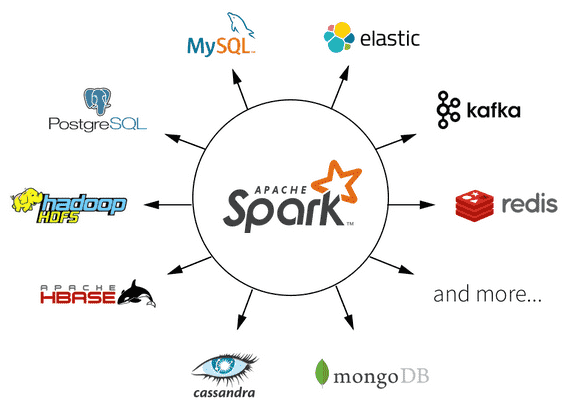
!Apache Spark concept diagram or illustration
Main Content
At the heart of Apache Spark’s speed and fault tolerance is its use of Resilient Distributed Datasets (RDDs), which distribute data across clusters and enable in-memory processing134. The foundational Spark Core engine provides essential services like task scheduling, memory management, and job execution. Key architectural components include the Spark Driver, which manages job scheduling through directed acyclic graphs (DAGs), and the SparkContext, which initializes and coordinates cluster resources and data manipulations126.
- Data transformation and ETL: Spark is widely used for Extract, Transform, Load (ETL) pipelines, enabling efficient processing of log files, sensor data, or social media streams.
- Real-time analytics: With Spark Streaming, organizations analyze live financial transactions for fraud detection or monitor IoT device streams for predictive maintenance23.
- Machine learning: Spark’s MLlib library facilitates large-scale training of models for recommendation systems, customer segmentation, or anomaly detection5.
- Interactive data exploration: Data scientists leverage Spark SQL for ad-hoc queries on massive datasets, powering dashboards and business insights3.
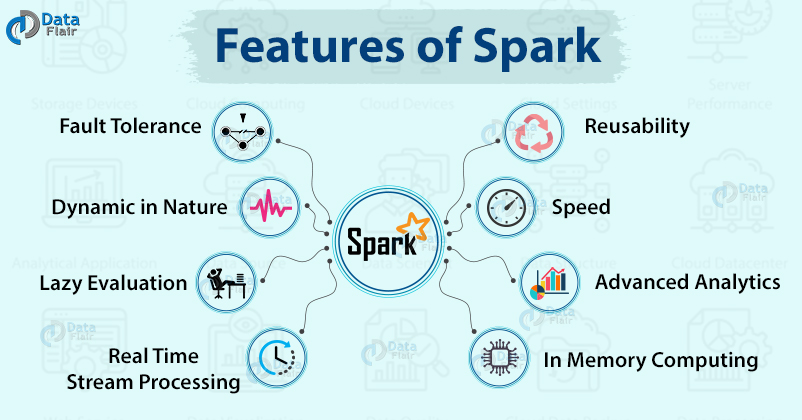
- Speed: Thanks to in-memory computing, Spark can process data up to 100x faster than traditional disk-based frameworks like Hadoop MapReduce234.
- Unified platform: Spark supports batch, streaming, SQL, machine learning, and graph processing through a common API, simplifying complex data workflows38.
- Scalability: Spark can scale to thousands of nodes, accommodating petabyte-scale data2.
- Ease of use: High-level APIs exist for Python, Java, Scala, and R, making Spark accessible to a wide range of developers and analysts12.
Despite its strengths, Spark requires careful cluster management and memory optimization, especially for truly massive datasets that may not fit in RAM. As workloads scale, Spark’s speed advantage can diminish, and operational complexity or costs become factors to address2. Integration with existing systems and security in multi-tenant environments are also important considerations.
!Apache Spark practical example or use case
Current State and Trends
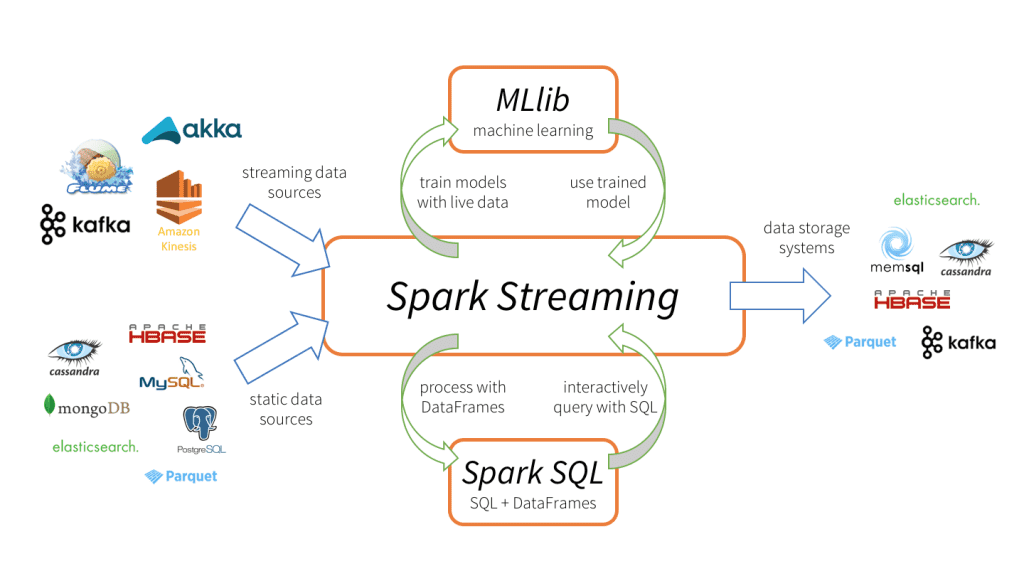
Apache Spark is now an industry-standard platform, widely adopted by tech leaders such as Databricks, IBM, and cloud providers like Microsoft Azure and Google Cloud3468. Major enterprises use Spark to power recommendation systems, real-time fraud analytics, and large-scale genomic research. The ecosystem includes key libraries: Spark SQL, Spark Streaming, MLlib (machine learning), and GraphX (graph processing)35.
Recent trends involve tighter integration with cloud services, Kubernetes support for dynamic cluster management, and acceleration via GPUs and FPGAs4. Spark’s Dataframe and Dataset APIs have become dominant for higher-level abstractions and performance tunings5.
!Apache Spark future trends or technology visualization
Future Outlook
As data volumes and AI adoption accelerate, Apache Spark is expected to remain central to advanced analytics infrastructure. Innovations in hardware acceleration, smarter resource management, and improved APIs will allow Spark to handle greater scale and more complex workflows. Its integration with cloud-native tools and streaming platforms will further expand use cases, shaping next-generation data-driven applications in healthcare, finance, and beyond4.
Apache Spark has redefined the possibilities of big data analytics with its speed, scalability, and versatility. As organizations deepen their reliance on data, Spark’s continuing evolution will help unlock new insights, driving innovation well into the future.
Citations
1: 2025, Nov 23. Apache Spark architecture: Concepts, components, and best practices. Published: 2025-10-29 | Updated: 2025-11-23
2: 2025, Nov 22. What is Apache Spark? A Complete Guide - Codecademy. Published: 2025-07-31 | Updated: 2025-11-22
3: 2025, Nov 22. Introduction to Apache Spark - Databricks. Published: 2025-11-13 | Updated: 2025-11-22
4: 2025, Oct 23. What Is Apache Spark? | IBM. Published: 2021-09-22 | Updated: 2025-10-23
5: 2025, Nov 23. Apache Spark - Wikipedia. Published: 2012-11-17 | Updated: 2025-11-23
6: 2025, Oct 11. Apache Spark in Azure Synapse Analytics overview - Microsoft Learn. Published: 2024-11-08 | Updated: 2025-10-11
7: 2025, Nov 08. Apache Spark™ - Unified Engine for large-scale data analytics. Updated: 2025-11-08
8: 2025, Nov 23. What is Apache Spark? | Google Cloud. Published: 2025-11-21 | Updated: 2025-11-23
Related in the catalogue
Databricks: Leading Data and AI Solutions for Enterprises
databricks.comOwn them all on the new data intelligence platform
Vendia
vendia.comTurn your enterprise data, assets, and services into AI-powered outcomes seamlessly and securely.

Wayfare AI
wayfare.aiThe Enterprise DataOS - enabling data driven digitalisation and innovation in enterprises.
Panoply
panoply.ioEasily manage and analyze data with Panoply, the easiest cloud data platform. Try Panoply's no-code data warehouse for free & connect your data in minutes.